Confidential · Discovery Meeting · Forvis Mazars × Abu Dhabi Quality and Conformity Council

Confidential · Discovery Meeting

Forvis Mazars × Abu Dhabi Quality and Conformity Council

Supporting ADQCC as you scale from tactical AI pilots to a governed, cross-organisation enterprise AI system for certification, testing, standards, and quality infrastructure.
×
Agenda

How this session is structured

Five chapters aligned to your brief. Items 1-4 in ~15 minutes, then we align on priorities.
1.Forvis Mazars: global presence, AI specialization, and the trusted third party model
2.The Opportunity: from tactical AI pilots to a unified enterprise AI system for quality infrastructure
3.The Insight: market signal, cross-sector evidence, and the emerging semantic stack
4.The Platform: AI operating system, disciplined stack, potential for ADQCC, case study, and live delivery proof
5.Alignment: identifying key areas of QCC collaboration and next steps
Professionals in a modern office atrium
01
Forvis Mazars
Forvis Mazars · Who we are

About Forvis Mazars

Forvis Mazars is a leading provider of audit & assurance, tax, advisory & consulting services worldwide. Our capabilities include:

  • Audit & assurance: Independent scrutiny, regulatory confidence, and governance you can stand behind.
  • Tax: Compliance and advisory across complex jurisdictions.
  • Financial advisory: Transaction, restructuring, and performance improvement.
  • Consulting: Operating model, transformation, and technology-enabled change.
  • Technology, Data & AI: Engineering, platforms, and sovereign AI delivery.

Global to see the big picture, local to understand it. Operating in over 100 countries and territories, we blend scale, capacity, and coverage with agility, profound insight, and a tailored approach.

Providing clarity. Building confidence. We are committed to providing a different perspective and an unmatched client experience that brings clarity and builds our clients' confidence to prepare for what's next.

US$5bn+
combined revenue*
100+
countries and territories
40,000+
combined professionals
400+
combined offices
1,800+
combined partners

*Forvis Mazars Group $3,251m + Forvis Mazars, LLP $1,939m as at 31 August 2024
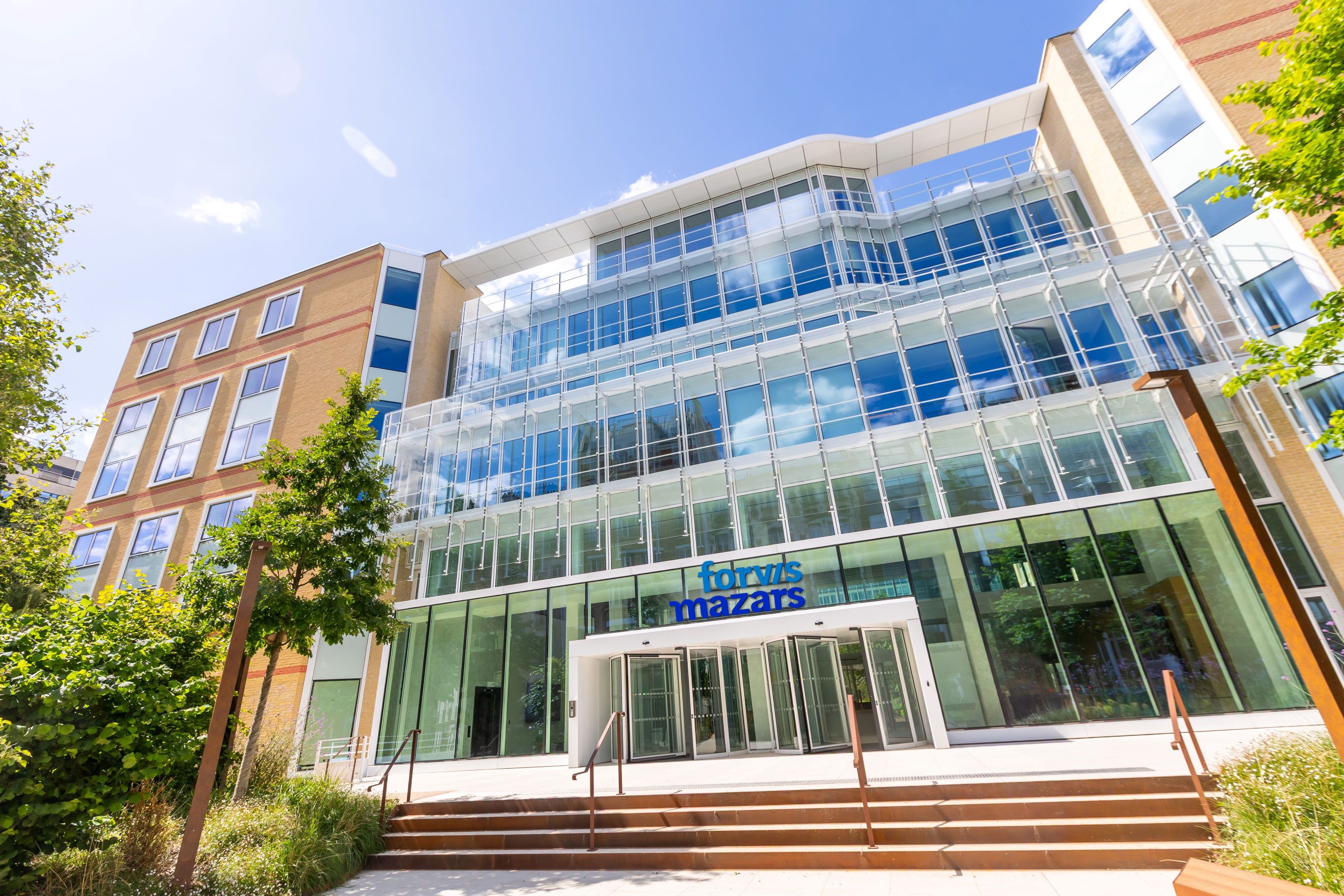
Forvis Mazars office
Forvis Mazars · Where we are

Our geographic footprint

Our 40,000+ strong team is committed to delivering an unmatched client experience across the globe.
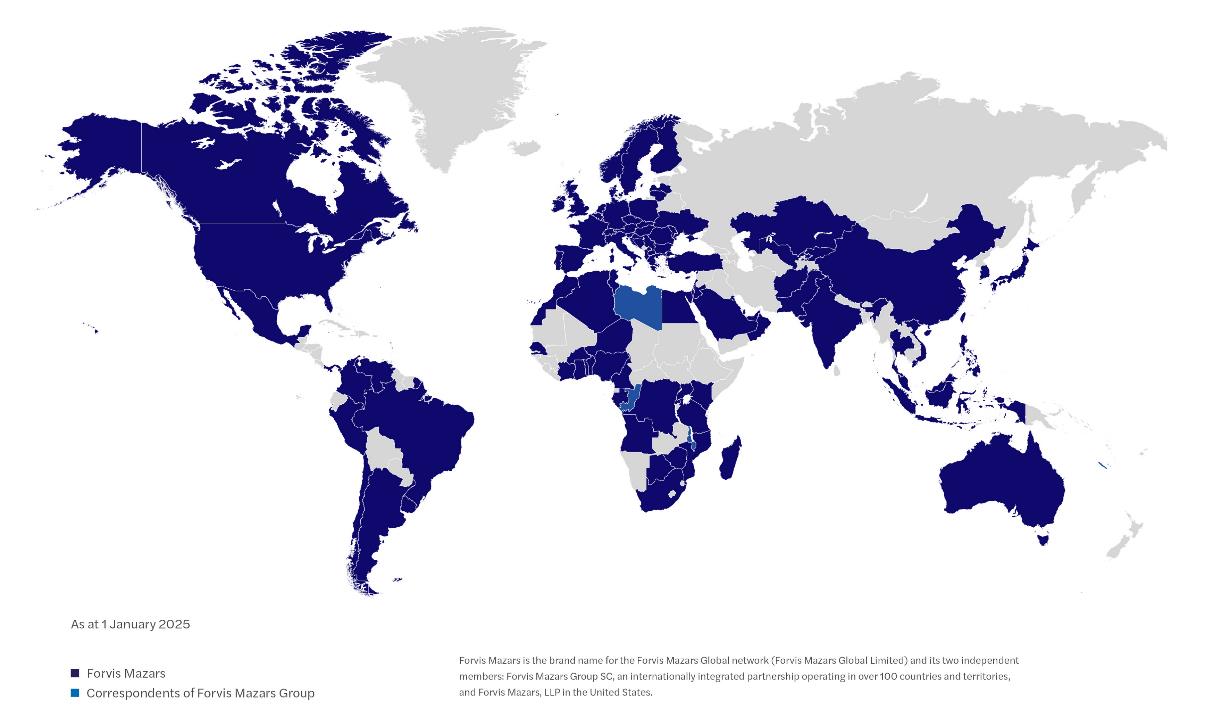
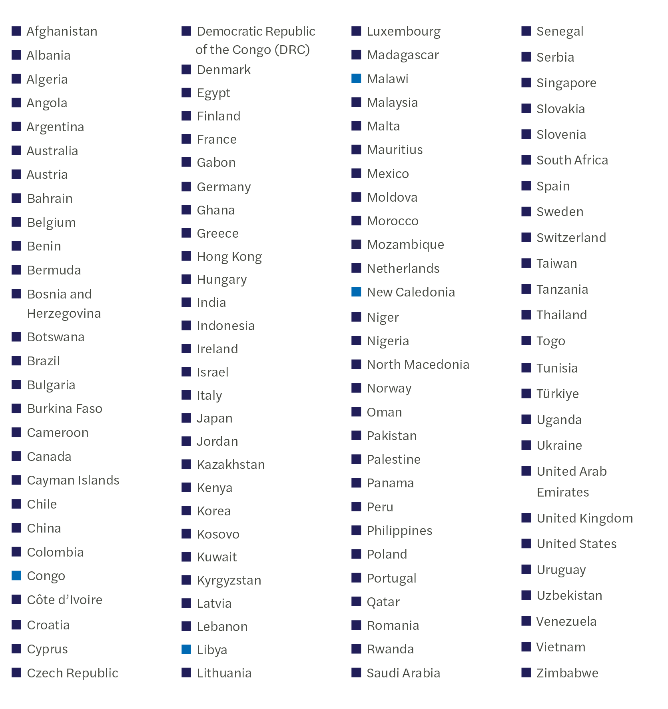
World map showing global presence Country list associated with the global footprint map
Forvis Mazars · What we do

A dedicated Technology, Data and AI engineering expertise

We operate with five further hubs and three centres of excellence standing behind this mandate on the same partnership terms.
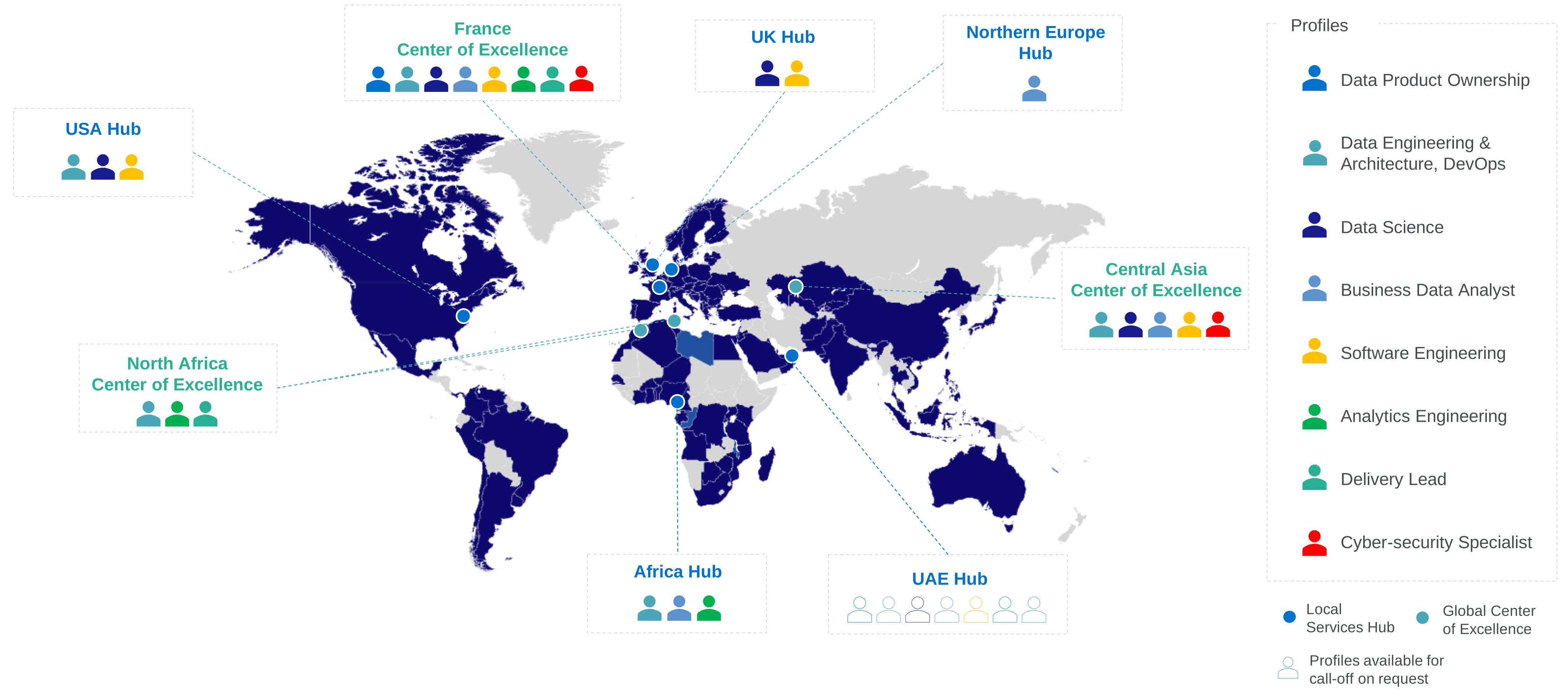
World map of Forvis Mazars Technology, Data and AI hubs and centres of excellence

Global hubs and centres of excellence provide depth on call when the mandate requires it.

Forvis Mazars
Forvis Mazars · Why us

Once AI is handed full autonomy, what is left? The trusted third party.

Forvis Mazars is building the supply chain of experts that will control, audit, and govern AI systems. The same role it plays in financial audit today, applied to AI.

AI Assurance & Semantic Governance

Investing in the foundation for trusted and auditable AI

  • Knowledge Management. Design and governance of enterprise semantic models to ensure consistency, traceability, and interoperability.
  • Ontology Vetting & Certification. Independent ontology review, semantic quality assessment, governance framework, AI readiness assessment.
  • Semantic AI & Executable Ontology. Grounding AI on business concepts, agent orchestration through semantic models, human-in-the-loop decision.

Ecosystem partnerships

NCOR
National Center for Ontological Research
Led by John Beverley. Ontology standards development and certification (BFO ISO/IEC 21838-2:2021)
NaasAI
NaasAI, ABI AI Platform
Led by Jeremy Ravenel. Opensource Agentic AI Platform, alternative to Palantir

Probabl
Probabl, The Scikit-learn Company
Led by Yann Chauvelle. Opensource. Track experiments, validate models, and collaborate with confidence
Semantic Arts
Semantic Arts
Led by Dave McComb. Knowledge graph design and ontology consulting. Pioneers of gist, the minimalist enterprise ontology.

Client
The organisation running AI at scale. Needs accountability, auditability, and a governance layer it controls.
Forvis Mazars · Trusted Third Party
Holds the mandate. Audits the AI systems. Accountable across the full programme lifecycle.
Semantic spine: the governed layer of shared definitions, concepts, and relationships that all AI systems in the organisation plug into. It owns meaning independently of any vendor or model.
Guardians of the AI system
Semantic & neurosymbolic AI experts. NCOR, ontology engineers, knowledge architects. They own meaning, not just output.
Operators
Tech platforms (NaasAI, Probabl, infrastructure stack) and human platforms (audit teams, domain experts, governance committees).
02
The Opportunity
The Opportunity · ADQCC context

Abu Dhabi Quality and Conformity Council: the operational context

ADQCC leads Abu Dhabi's quality infrastructure: conformity assessment, central testing laboratories, metrology, standards development, and consumer market services.

What we understand today

  • Mature organisation (~10 years) with tactical AI use cases across inspection, testing, and operations.
  • Rich open data and published standards: a strategic asset not yet a unified semantic layer.
  • Mandate to scale cross-organisation with governance, not just speed.
  • Vision: developing Abu Dhabi's quality infrastructure to enable global distinction.

Where AI systems fit

  • Standards semantization: PDF specifications to governed ontologies and queryable agents.
  • Lab and inspection workflows connected through one enterprise data model.
  • Certification, Trustmark, Nutri-Mark: meaning encoded once, reused everywhere.
  • From pilots to a sustainable, auditable enterprise AI operating model.
The Opportunity · The semantic spine

Your terms. Your definitions. Your rules. Forever.

Tools are like fashion: you adopt them for five years, then replace them. Your semantic backbone is not replaceable.

Forvis Mazars encodes your process catalogue in open standards (BFO/CCO), not proprietary formats. Every AI system and every future vendor plugs into it. You own the meaning; we bring the expertise to build it.

What you keep

Your sovereign layer

  • Terms and definitions: in your language, your context, your jurisdiction.
  • Process catalogue: formally encoded, not locked in slide decks.
  • Governance rules: auditable, versioned, machine-readable.
  • Open standards: BFO/CCO, same baseline as NATO, NIH and DoD.
What becomes interchangeable

Everything else

  • Compute vendors: on-prem, colocation, cloud, hybrid.
  • AI platforms: open-source or proprietary, today and in 10 years.
  • Analytics and reporting tools.
  • Integration partners and implementation vendors.

This is how we already work in accounting and financial regulation. We are now applying the same discipline to AI, building the chart of accounts for intelligent systems.

03
The Insight
The Insight · Market signal

Search interest for ontology AI is moving from niche to visible demand.

Google Trends index, worldwide monthly interest
2023202420252026May 2026 0255075100 Ontology AI: 66 Forward deployed engineer: 100
Ontology AIForward deployed engineer

Executive readout

  • Both terms stayed near zero through 2024, then accelerated sharply from mid-2025.
  • By May 2026, forward deployed engineer reaches the Trends maximum of 100, while ontology AI reaches 66.
  • The signal is not mature adoption. It is market attention moving toward ontology-backed AI delivery and embedded implementation roles.

Implication: semantic infrastructure is becoming part of the AI operating model, not a specialist data architecture topic. The strategic insight is that while many use ontology and AI as buzzwords, the craft is already being applied in the most demanding environments: NATO, NIH, and the US Department of Defense all operate on BFO (ISO/IEC 21838-2:2021), a formal ISO standard for information technology. That is where the signal is real.

The Insight · Why now

AI makes knowledge easier to generate, but harder to organize.

The AI paradox

More output, less coherence

Organizations are accumulating documents, reports, dashboards, copilots, agents, vector indexes, and generated summaries without a shared model of the things those systems talk about.

Missing layer

Systems need shared entities

AI workflows need stable understanding of people, products, locations, processes, regulations, assets, events, evidence, and decisions.

What increases

  • Content volume.
  • Model experimentation.
  • Platform choices.
  • Agent workflows.

What does not automatically increase

  • Shared definitions.
  • Decision traceability.
  • Governed mappings.
  • Cross-platform meaning.

Result

More AI does not necessarily create more coherence. Semantic infrastructure is the control layer that keeps AI grounded in the same reality as operations.

The Insight · The pattern

The most advanced organizations are converging toward the same pattern: models change, platforms change, but semantic assets become durable.

Fragmentation remains

Systems do not converge by themselves

Operational systems, documents, dashboards, copilots, and data platforms keep multiplying. The result is more access to data, not necessarily more shared understanding.

Stable asset

Meaning becomes reusable infrastructure

Healthcare, defense, finance, retail, cloud, and energy examples show the same move: controlled terms become ontologies, then knowledge graphs, then governed workflows.

Strategic hypothesis

Representation may beat model choice

The next advantage may not come from having a better AI model. It may come from having a better representation of operational reality.

Core message

Strategic semantic infrastructure lets an enterprise change AI models, platforms, and applications while preserving the governed meaning those systems depend on.

The Insight · Cross-sector landscape

The organization evidence points to the same architecture pattern.

Palantir Technologies logoPalantir TechnologiesEnterprise, defense, operations
OBO Foundry logoOBO FoundryLife sciences ontology ecosystem
United States Department of War sealDepartment of War / DoD and ICDefense ontology standards
U.S. Department of Homeland Security sealU.S. Customs and Border Protection / CBPBorder operations ontology
National Institutes of Health logoNational Institutes of Health / NCBO BioPortalBiomedical infrastructure
NATO research community logoNATO research communityDefense interoperability
Google logoGoogleSearch and AI infrastructure
Microsoft logoMicrosoftEnterprise data and AI
Amazon Web Services logoAmazon Web ServicesCloud graph infrastructure
IKEA logoIKEAConsumer goods, retail, and digital experience
EDM Council FIBO logoEDM Council FIBOFinance
Goldman Sachs / FINOS Legend logoGoldman Sachs / FINOS LegendFinance
JPMorgan Chase logoJPMorgan ChaseFinance
Gene Ontology Consortium logoGene Ontology ConsortiumLife sciences
Open PHACTS logoOpen PHACTSLife sciences / pharma
AstraZeneca logoAstraZenecaLife sciences / pharma
Roche logoRocheLife sciences / pharma
Novartis logoNovartisLife sciences / pharma
Pfizer logoPfizerLife sciences / pharma
DARPA logoDARPADefense research
Boeing logoBoeingAerospace
Airbus Skywise logoAirbus SkywiseAerospace
The Open Group OSDU logoThe Open Group OSDUEnergy
Equinor logoEquinorEnergy
The Insight · Cross-sector lessons

The same lesson appears across sectors: durable meaning outlasts systems.

Healthcare

SNOMED

Clinical interoperability requires shared definitions. The ontology becomes infrastructure, not an application.

Life sciences

OBO Foundry

Federated ontologies let research organizations collaborate without redesigning meaning.

Defense

Mission models

Interoperability starts with common operational understanding, not APIs alone.

Internet platforms

Google

Entity-centric systems outperform document-centric systems for search, assistants, and recommendations.

Cloud and open source

AWS / Linux

Standard infrastructure layers become reusable foundations. Semantic assets may follow the same path.

Strategic lesson

Organizations that control their semantic infrastructure are better positioned to change models, adopt platforms, integrate acquisitions, comply with regulation, and preserve institutional knowledge.

The Insight · Emerging stack

Semantic infrastructure connects systems, data, meaning, graph memory, and AI execution.

Operational systems Apps, sensors, documents workflows, local capture Data products Curated data, APIs evidence, lineage Ontology / semantic model Meaning contract: definitions identifiers, relationships constraints, mappings Knowledge graph Connected memory: entities, events provenance, context Agent context / AI Retrieval, reasoning recommendations, execution Governance and control: ownership, validation, lifecycle, auditability Actions and audit trail return to operations

How to read it

  • Data products make evidence reusable, but the ontology defines what that evidence means.
  • The knowledge graph connects approved meaning to operational memory: entities, events, provenance, and context.
  • Agents consume governed context, execute workflows, and leave an audit trail back to operations.

Strategic point: platform choice matters less than control of the semantic contract.

04
The Platform
The Platform · The concept

One AI operating system across your operations.

The meta-grid that connects intent to outcome, commitment to fulfilment. One system where your people and AI agents work side by side on the same semantic spine, human and machine collaboration designed in, not bolted on.

AI operating system One semantic spine · shared data · agents · workflows Your people Advisors, operators, decision-makers Stay in command of the judgment calls AI agents Routine operations, monitoring, drafting Handle the volume, escalate the unknowns Sovereign infrastructure Owned by ADQCC · nothing leaves the perimeter without consent
The idea

How to read it

  • One operating system, not a sprawl of disconnected tools to manage.
  • Your people and AI agents work on the same semantic spine: agents handle the volume, people keep the judgment calls.
  • For ADQCC, standards, lab testing, inspection, certification, and open data all run on one system you own and control, with no data crossing the perimeter unless you allow it.
The Platform · The stack

Services, modules, components: a disciplined stack

Shared platform services abstract infrastructure; modules and components carry domain logic.

Presentation · pages & assets Client-facing surfaces and deliverables Components Reusable building blocks within modules Modules Domain logic · agent workflows · business rules Platform services (shared) DB · storage · email · API gateway · secrets · vector · graph Models Mistral · Qwen · open-source · sovereign-hosted · no vendor lock-in Infrastructure (abstracted from modules)
Shared services

Platform services

  • Relational, document, vector, and graph databases.
  • Object storage, email, API gateway, secrets store.
  • Modules consume services, not raw infrastructure.
Application layer

Modules and components

Every platform we build follows the same disciplined hierarchy: service → module → component → asset.

The Platform · Potential for ADQCC

The same pattern that works for defense, finance, and healthcare applies directly to certification and quality infrastructure.

Own meaning once

One definition, every system

A standard, a product, a lab result, a certificate, an inspection: define these once in a governed semantic layer and every system, every agent, and every report works from the same reality. No more conflicting records across LIMS, documents, inspection systems, and open data portals.

Anchor in operations

Decisions, not data models

The entry point is operational: which standard applies, which test was run, which certificate is valid, under what evidence. Semantic structure follows from those questions, not the other way around.

Auditability

Every action traceable

Certification and quality infrastructure require full accountability: who approved what, when, based on which briefing. A governed semantic layer makes every decision traceable by design, not by manual reconstruction.

No vendor lock-in

The layer belongs to ADQCC

Encoded in open standards (BFO/CCO), the semantic spine is not tied to any platform. Systems change; the meaning stays.

The Platform · Case study

Asset maintenance and equipment safety at TotalEnergies

Industrial assets are the subject. CFIHOS and ISO 14224 encode their meaning once, then inspection, maintenance, and certification workflows share the same governed reality.

The subject: physical assets in operation FPSO / platform Pressure vessel Valve assembly Functional location Operational data Sensors · work orders Inspection reports Semantic standards layer CFIHOS · ISO 14224 Equipment taxonomy and failure modes shared across Cognite, SAP, and inspection tools Inspection & safety Pressure tests, hazard checks, regulatory evidence Maintenance Job cards, work history, cross-asset transfer Certification Equipment fitness, audit trail, sign-off Parallel at ADQCC Product / material → published standard → lab test result → certificate (Trustmark) Same pattern: physical subject first, governed meaning second, conformity workflows third

Why this resonates with ADQCC

  • Subject first: a vessel, valve, or building material sample is the anchor, not the software.
  • Standards encoded once: inspection, lab testing, and certification pull from the same definitions.
  • High-assurance by design: every decision leaves an audit trail when errors have safety consequences.
  • One reference today: we discuss only this authorised TotalEnergies example in the energy sector.

The parallel is direct: ADQCC infrastructure certification and central lab testing run on the same semantic pattern.

The Platform · Live demo

This portal is a live demonstration of what we build

Not slides describing a method. An actual system, built with the workflow we are proposing.

These slides are part of a portal you are looking at right now, produced using BOB, our own AI system, its structured codebase, and agent-driven workflows. Every slide, every knowledge graph, every section was generated from formally organised content.

Codebase structure

Built inside BOB

  • The portal is a module created inside BOB, Forvis Mazars' own AI platform.
  • The engagement content, slides, and ontology were produced directly from that module.
  • This ADQCC portal was built the same way: structured content, agent workflows, version-controlled delivery.
Workflow

How it was produced

  • Content structured as semantic modules, not slide text.
  • Feedback from this call translated into code changes in real time.
  • Every change tracked: pull requests, review, version history.
  • This is the delivery model we can apply to ADQCC engagement artefacts.
05
Alignment
Agenda item 5 · Alignment

Let's align on priorities

We prepared this brief around your mandate. Tell us your priorities, your current architecture, your live use cases, and where alignment creates the most value.

  • What AI use cases are live today, and who owns them?
  • Where do standards, lab data, and inspection workflows need to connect?
  • What does success look like for a cross-organisation AI system at ADQCC?